Ghost Girl
A narrative-driven survival horror game where a young girl helps her ghost companion process grief.
Roles: Game Designer
Timeline: 14 weeks
Tools: UE5, Figma, Ableton Live
-
After the passing of a loved one, a girl visits the cemetery where she meets a ghost attracted to her candle. The ghost guides the girl to their home where they need her help to find acceptance and pass on.
Solve puzzles with your new ghost friends to navigate their maze-like houses. Guide the ghosts with your candle to objects they can animate and bring to life. Gain their trust to discover who they were and what’s keeping them here. Each ghost has their own unique story to tell and will log their memories in your journal so you don’t forget them. -
Develop a gameplay experience from ideation to polished experience
-
A polished vertical slice that received a 1st (highest grade in UK grading system).
Game Development Process
My process for concepting, designing, developing and polishing Ghost Girl.
Page section links:




Game Ideation
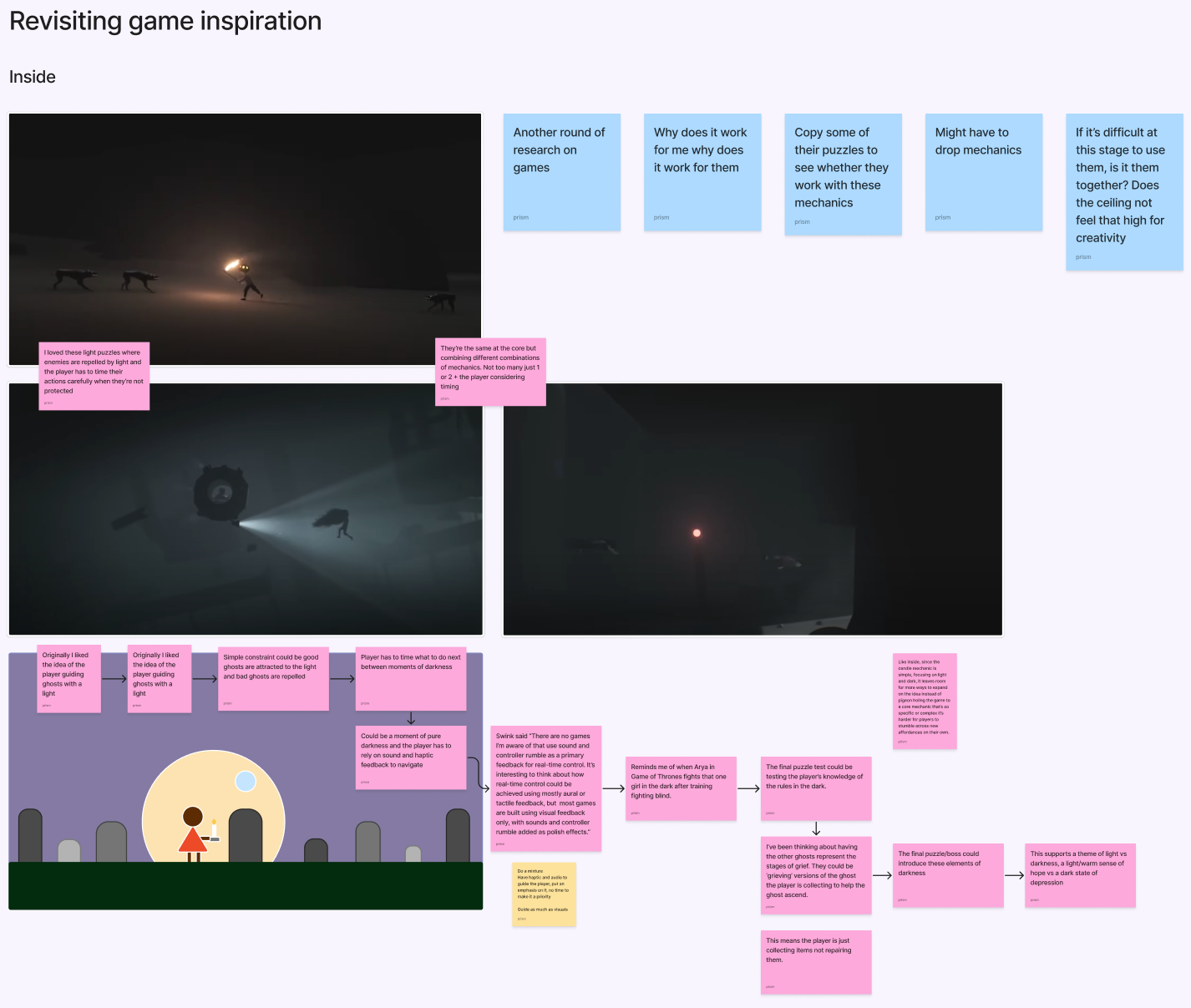
Gameplay inspiration
The gameplay was heavily inspired by Inside’s simple yet expansive puzzles
Inside
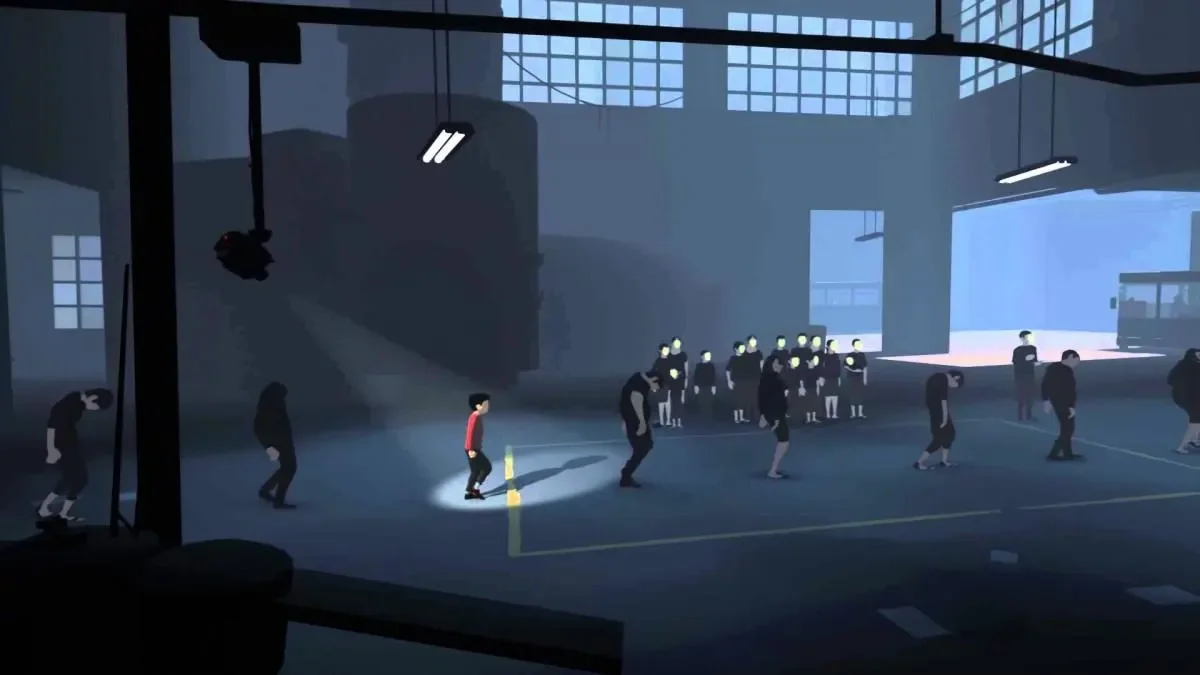
The gameplay was heavily inspired by Inside’s simple yet expansive puzzles.
I wanted to also select a few mechanics that the player could learn how to use with the environment through trial and error.
I also love Inside’s atmosphere and wanted to create tension for the player through camera angles and audio.
Noting Mechanic Inspiration
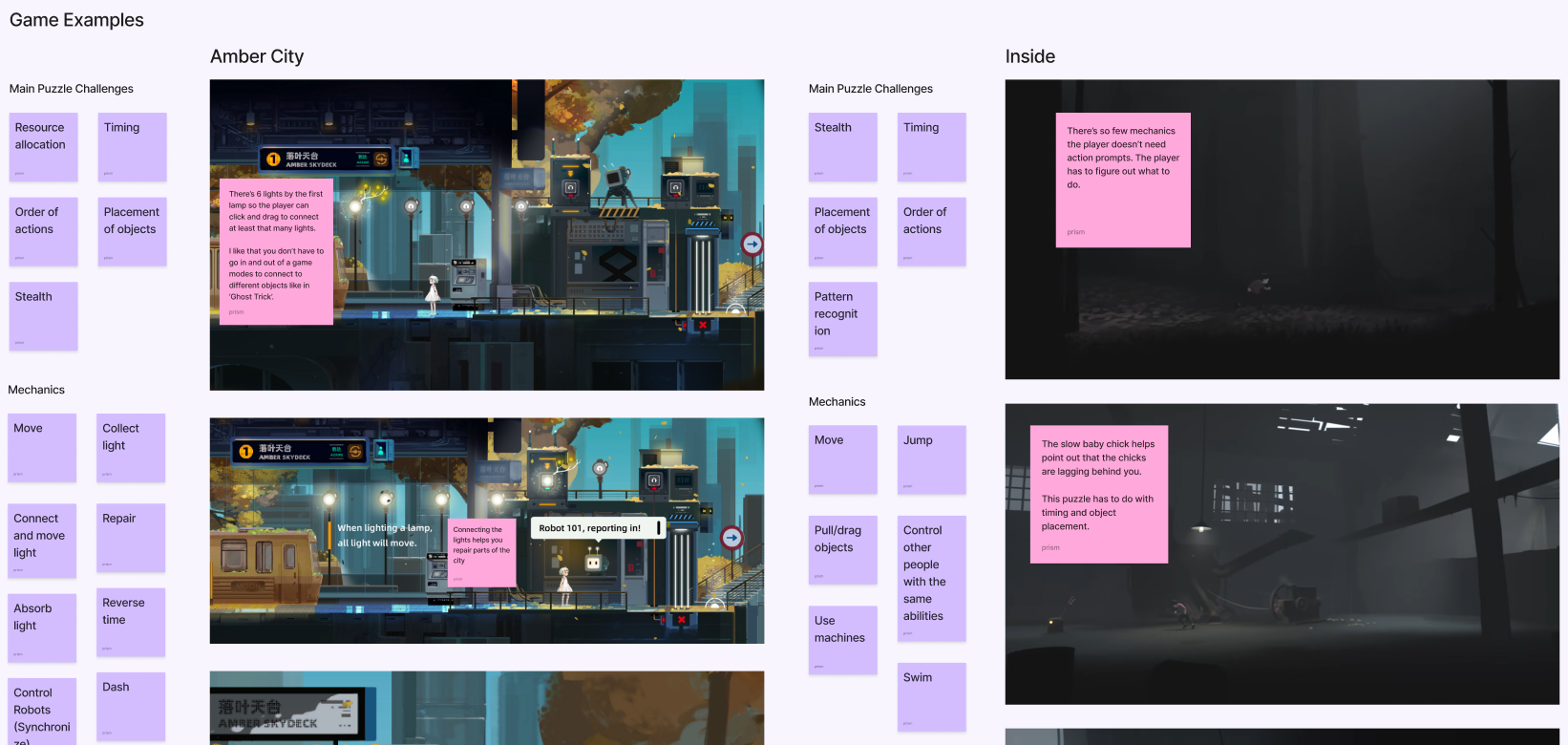
I played various puzzle games, noting their challenges, mechanics and the experiences that stuck out to me.
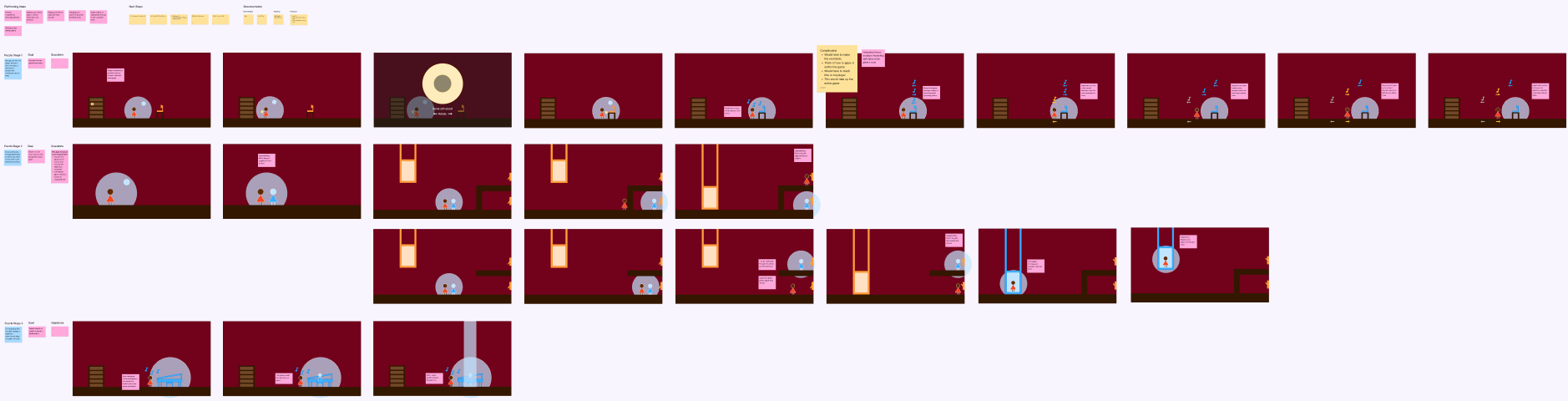
I then began paper prototyping in Figma ideas of a girl using a ghost to posess objects to navigate.
Paper Prototyping
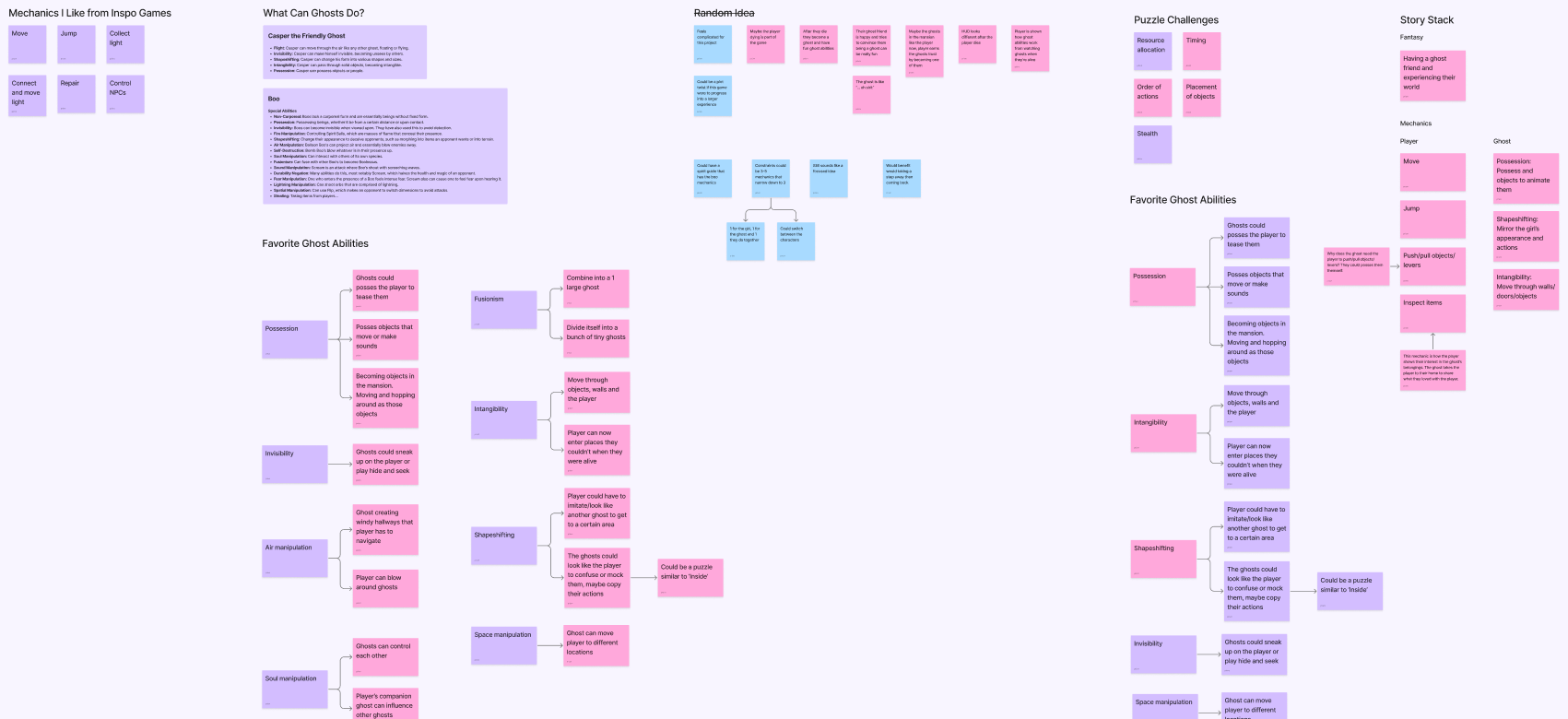
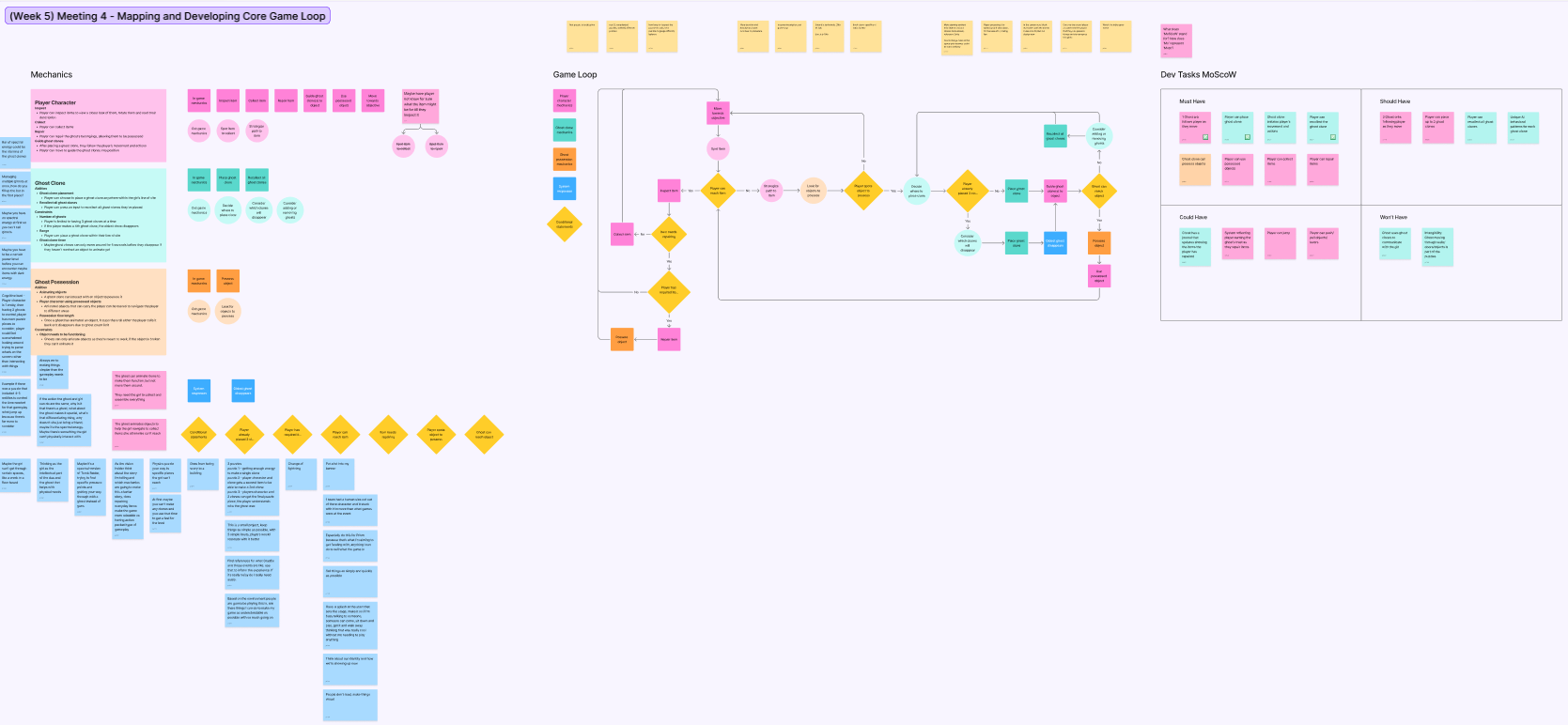
I liked the ghost theme and brainstormed potential mechanics based on ghost abilities from popular ghost characters and inspired by haunted houses.
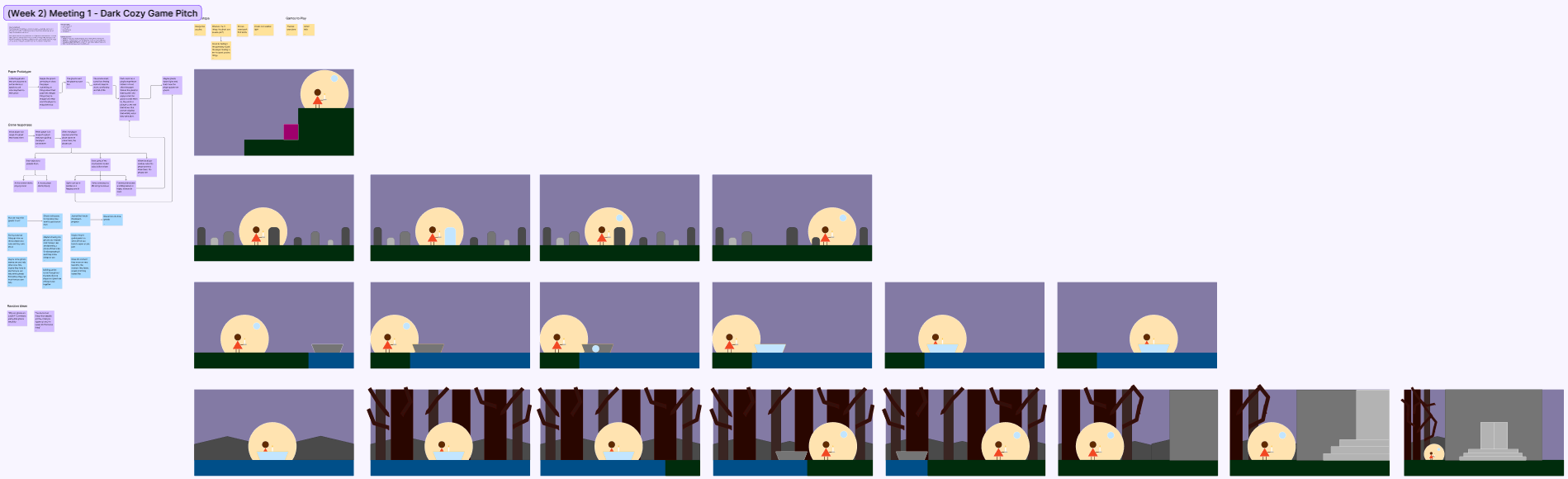
I continued to paper prototype more specific object posession ideas and mapped out a gameplay loop to start developing.
Prototyping
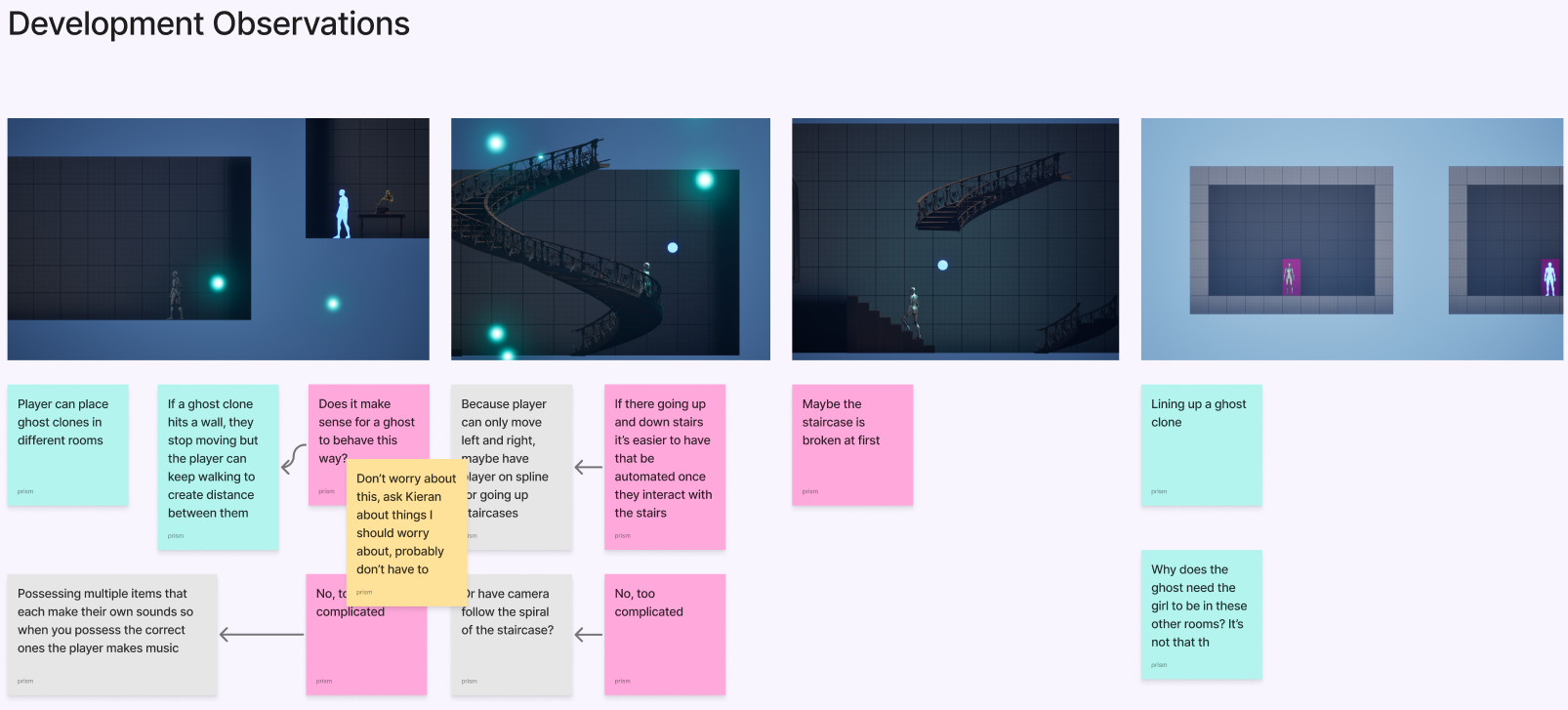
Early prototypes
I started developing the gameplay loop with simple prototypes to validate whether these mechanics feel intrinsictly enjoyable to do.
Revisiting gameplay ideas
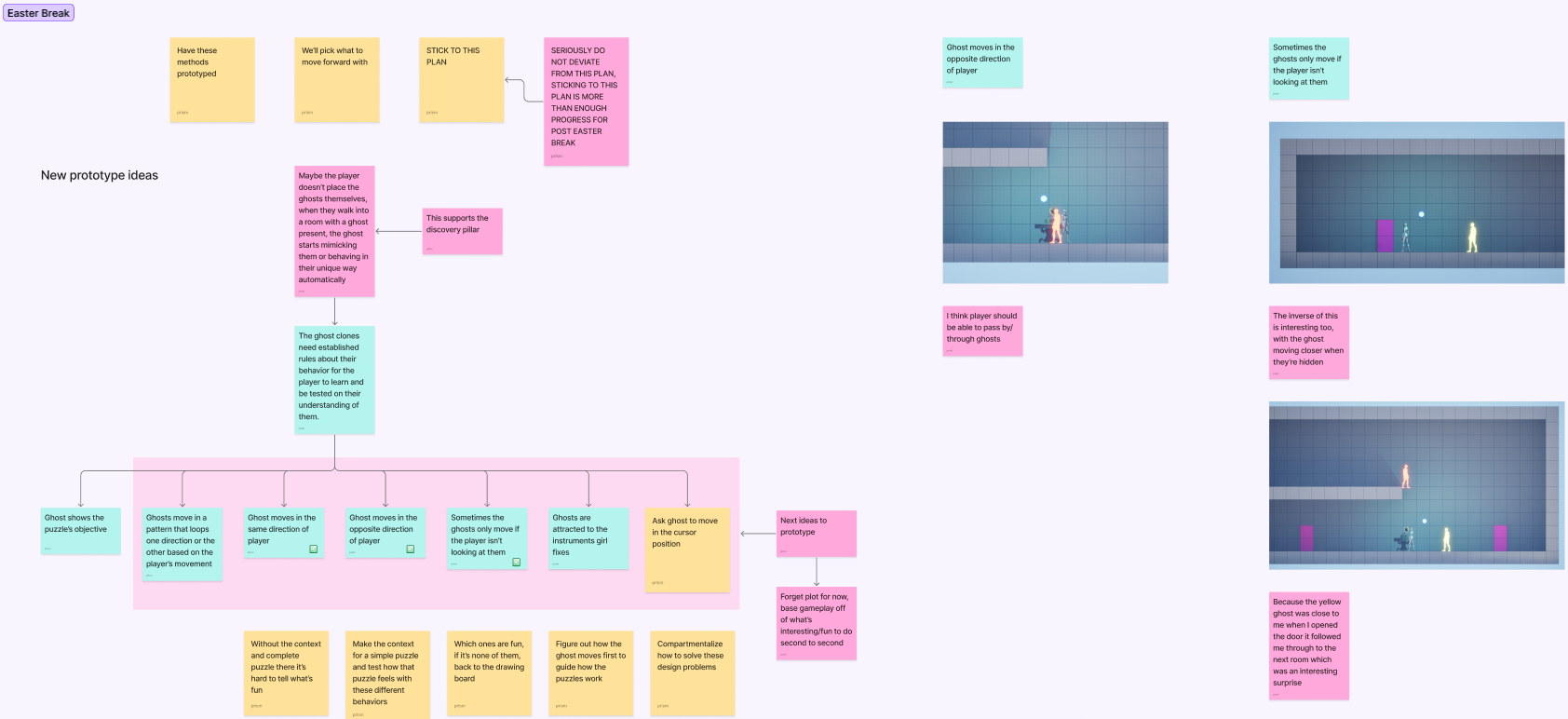
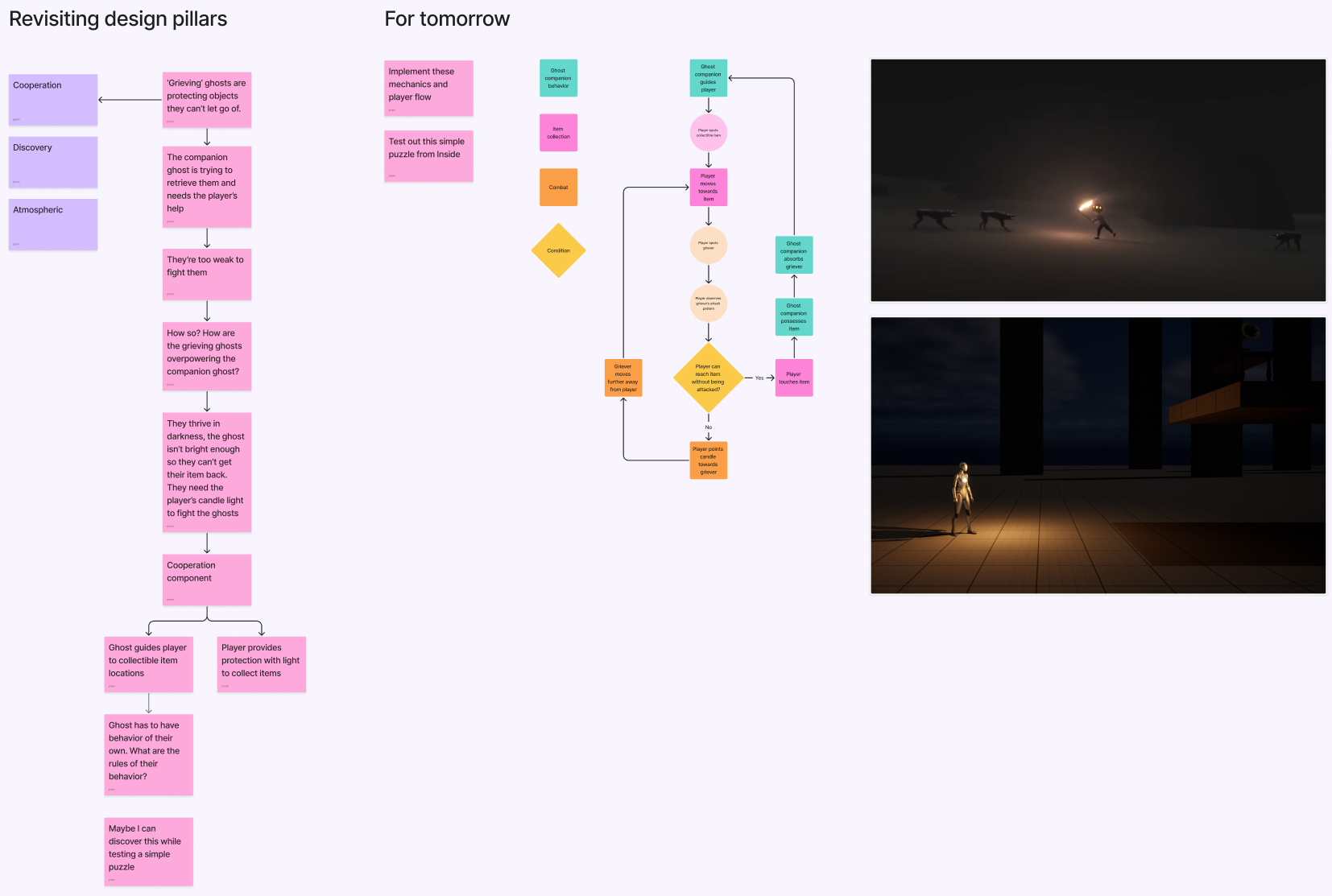
I didn’t like my initial paper prototype puzzle ideas after prototyping them in engine. I returned to my game inspiration and was inspired by puzzles where enemies were repelled from light sources the player controlled.
I came up with a new idea where an enemy ghost in the haunted house is repelled from the player’s candle. The player would still use their ghost friend to interact with their environment but the enemy ghost would help create constraints and tension.,
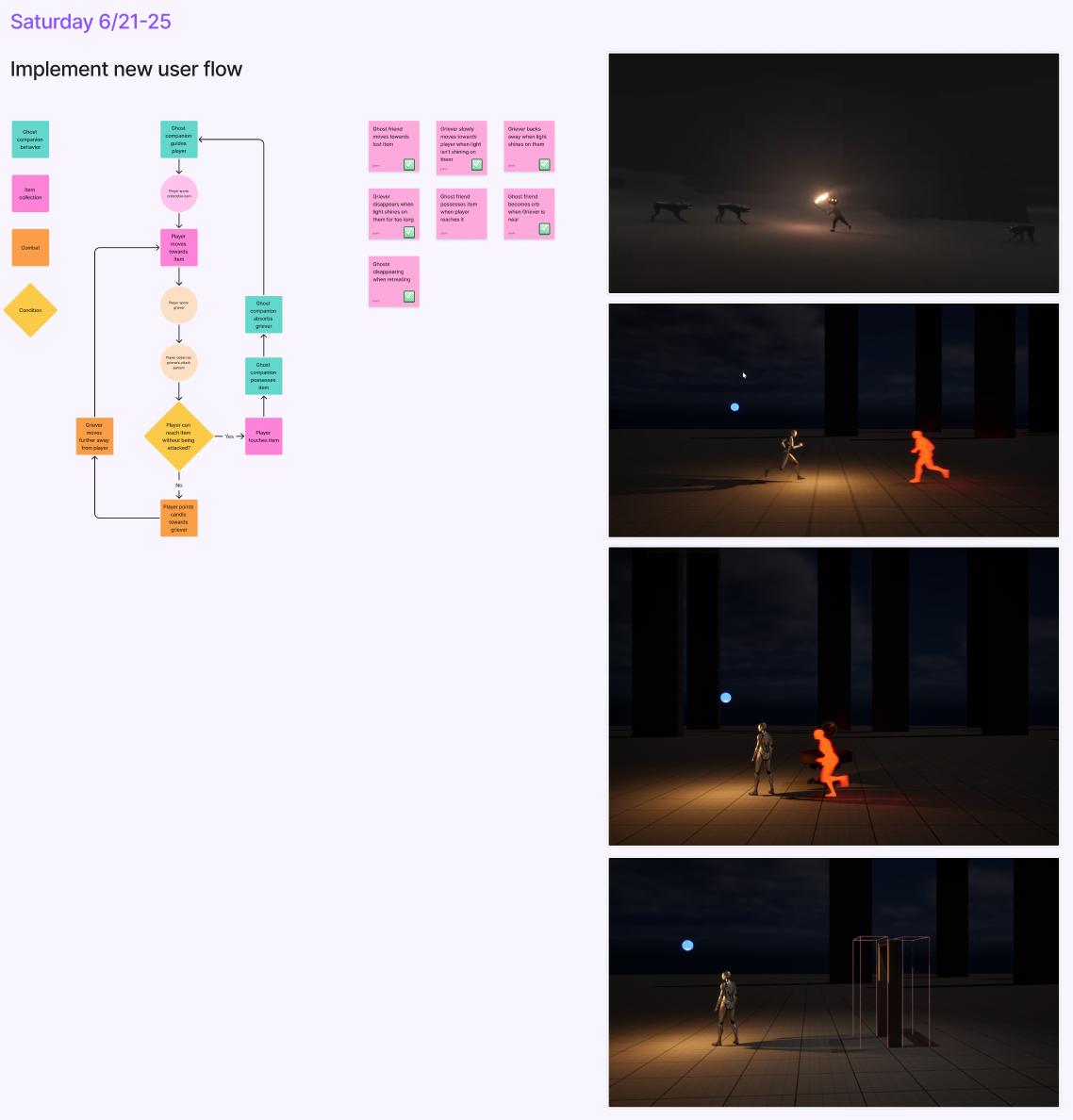
New prototype
I developed the new prototype starting with getting the Griever (enemy AI ghost) to appear and chase the player when their back was turned. Then I added more behavior tree states to have them Griever back away if facing the light.
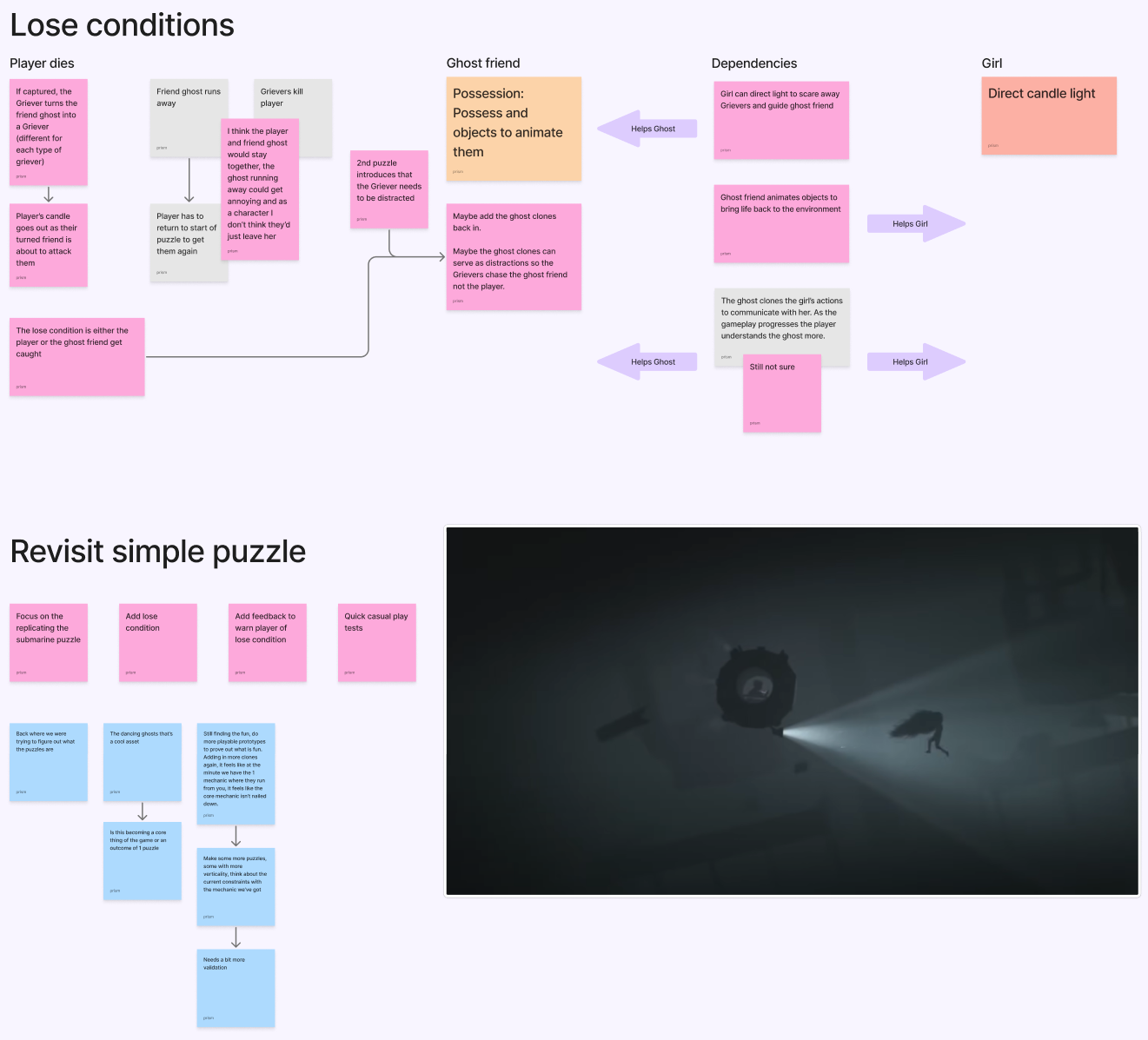
From these prototype iterations I considered and defined the lose conditions for the gameplay to start designing puzzle sections.
Puzzle Design
Architecture Inspiration
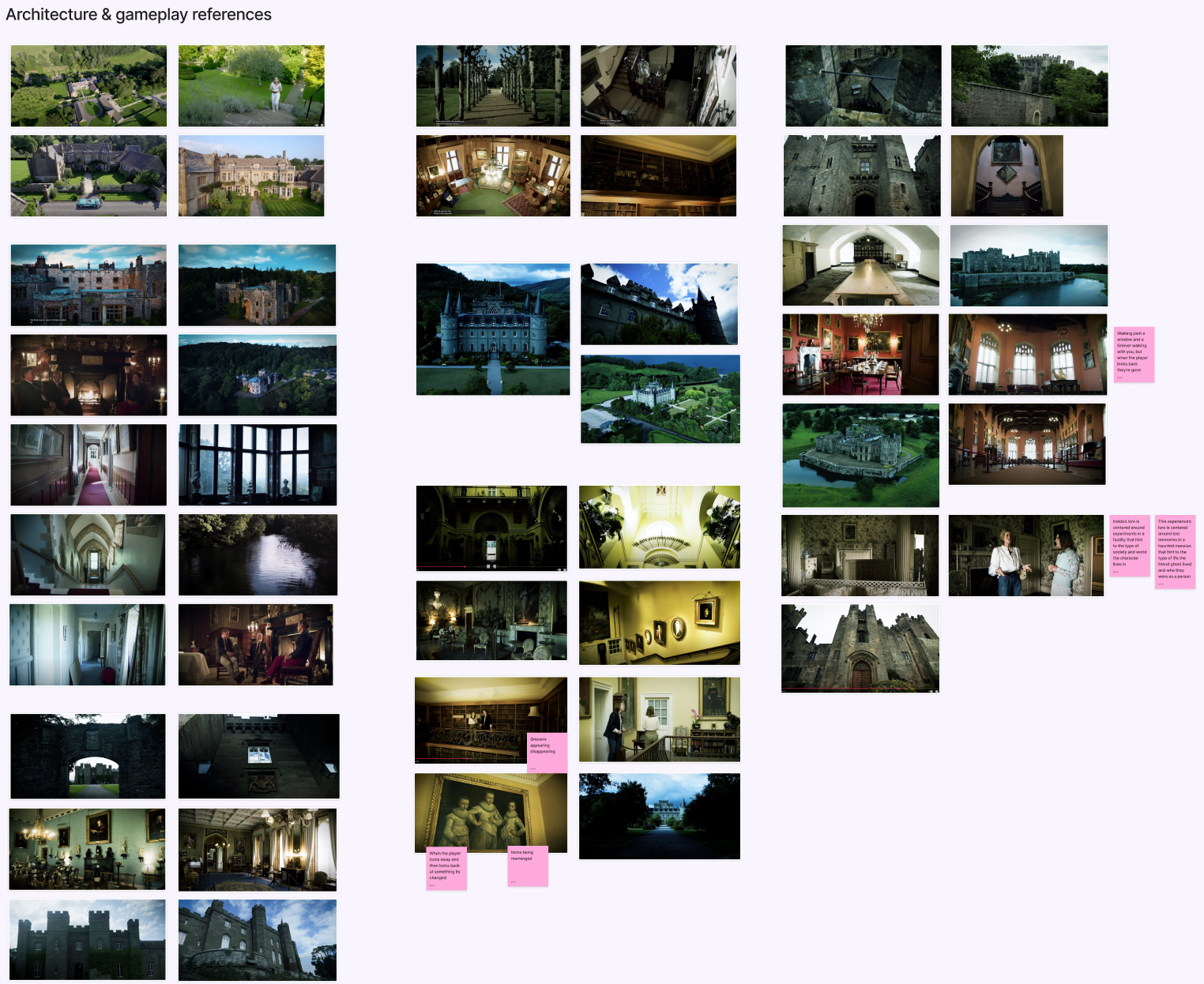
To inspire puzzle scenarios and environment objects to interact with, I researched different haunted houses in the UK and thought of ways to bring their stories to life.
Mechanic Affordances
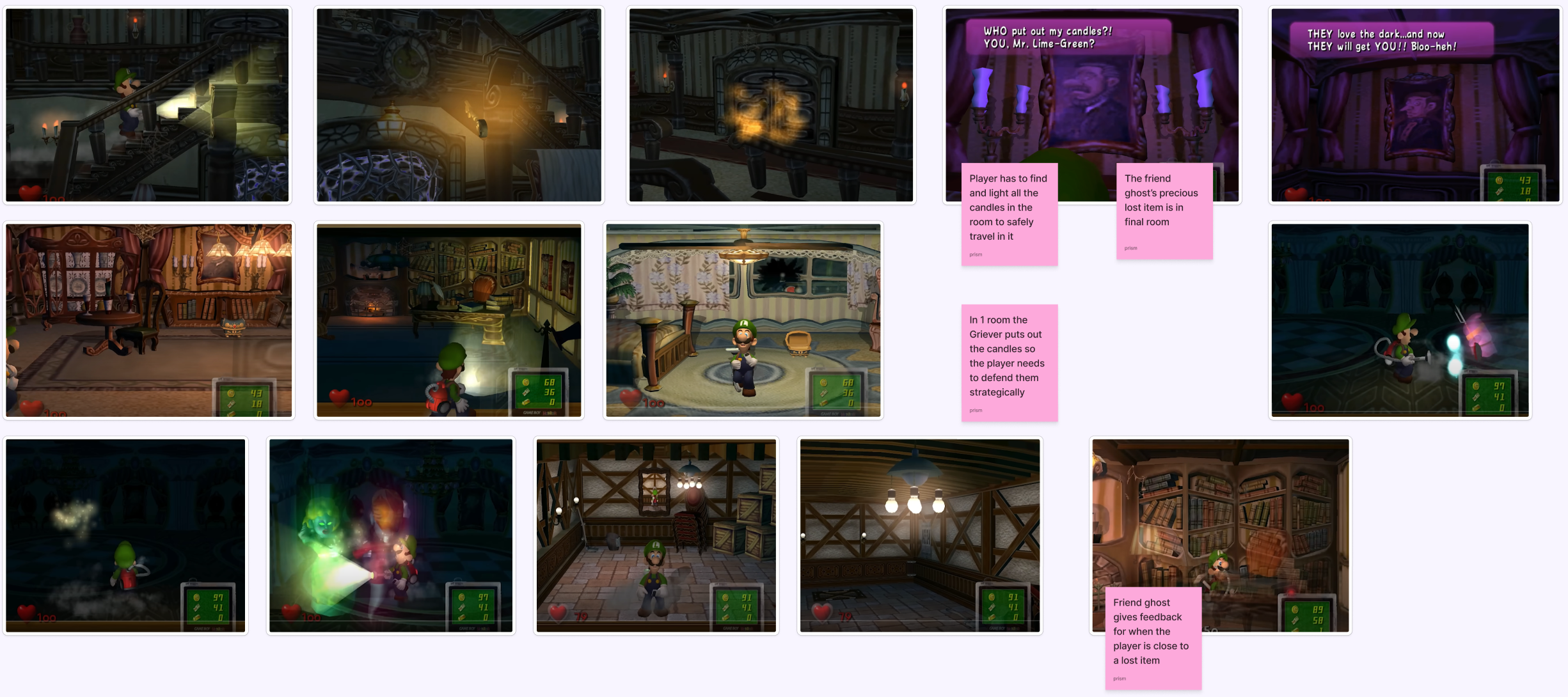
I watched and played games with similar mechanics and objectives to study their pacing for immediate and long term player goals.
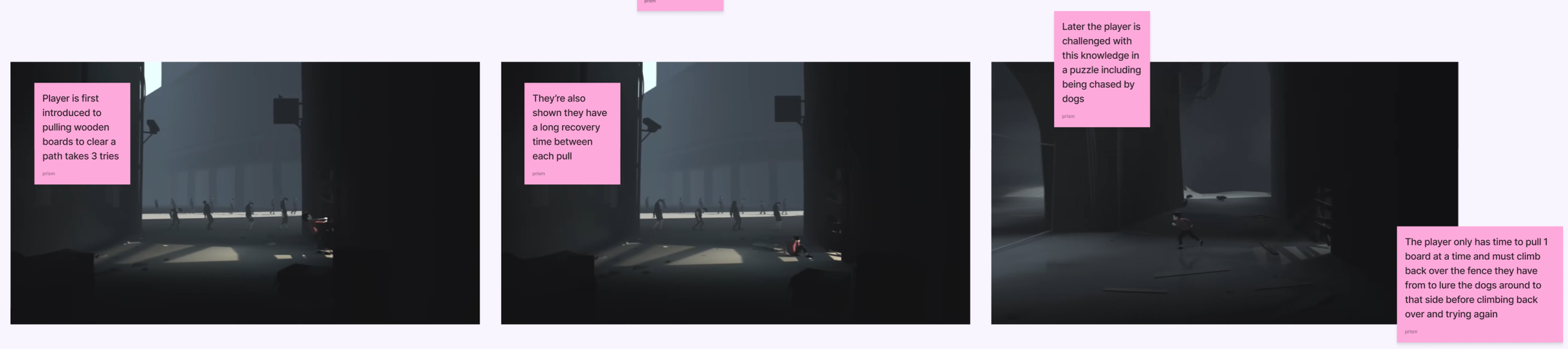
I especially was inspired by Inside’s puzzle where the player needs to pull at a boarded exit 3 times in order to escape.
They built upon this puzzle by adding new threats that made the constraint of only being able to remove 1 wooden board at a time more important and risky.
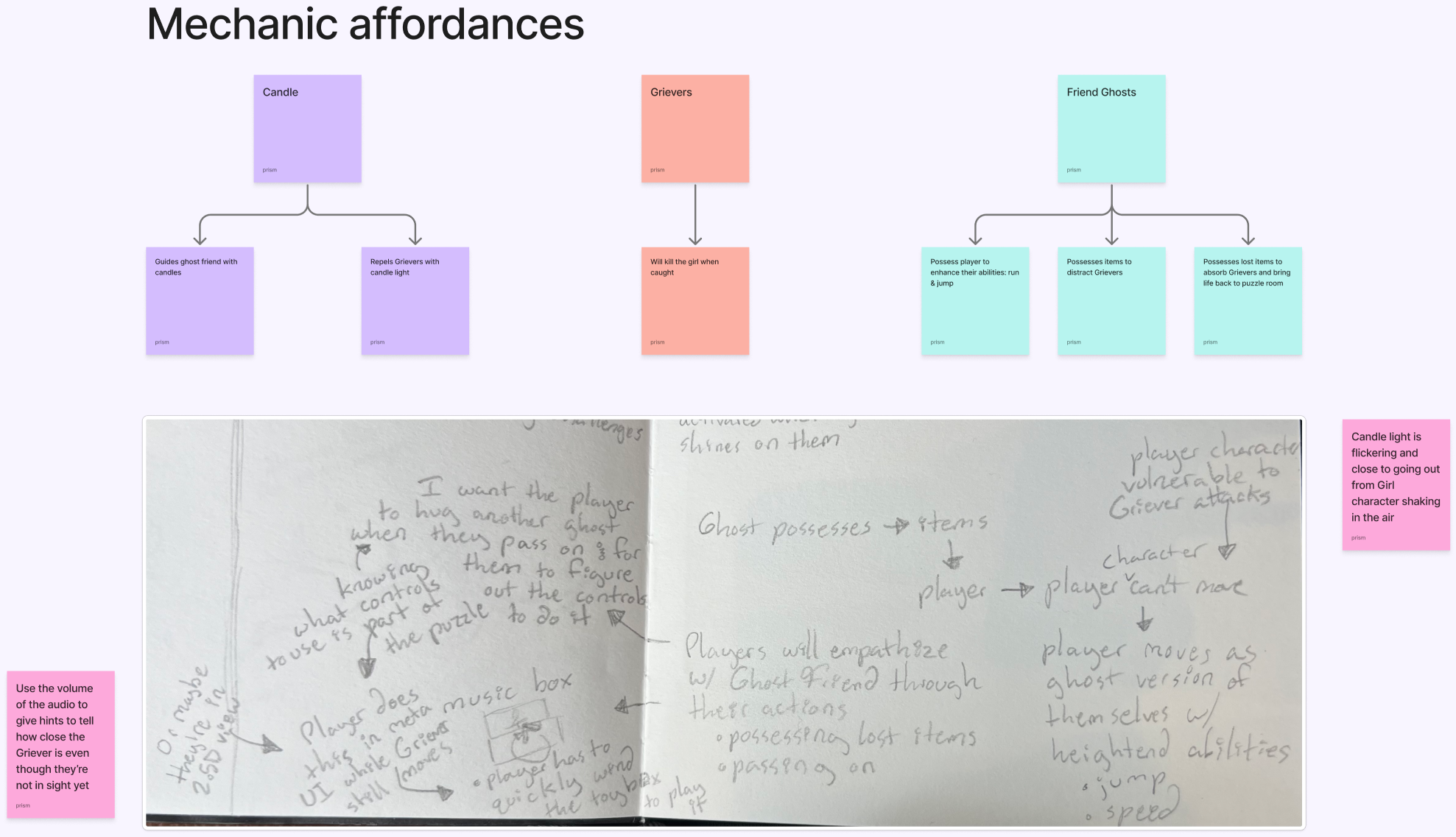
After note taking and thinking about scenarios I defined the game’s characters, objects and mechanics the player has to intereact with them. I used these mechanics as the building blocks for designing puzzles.
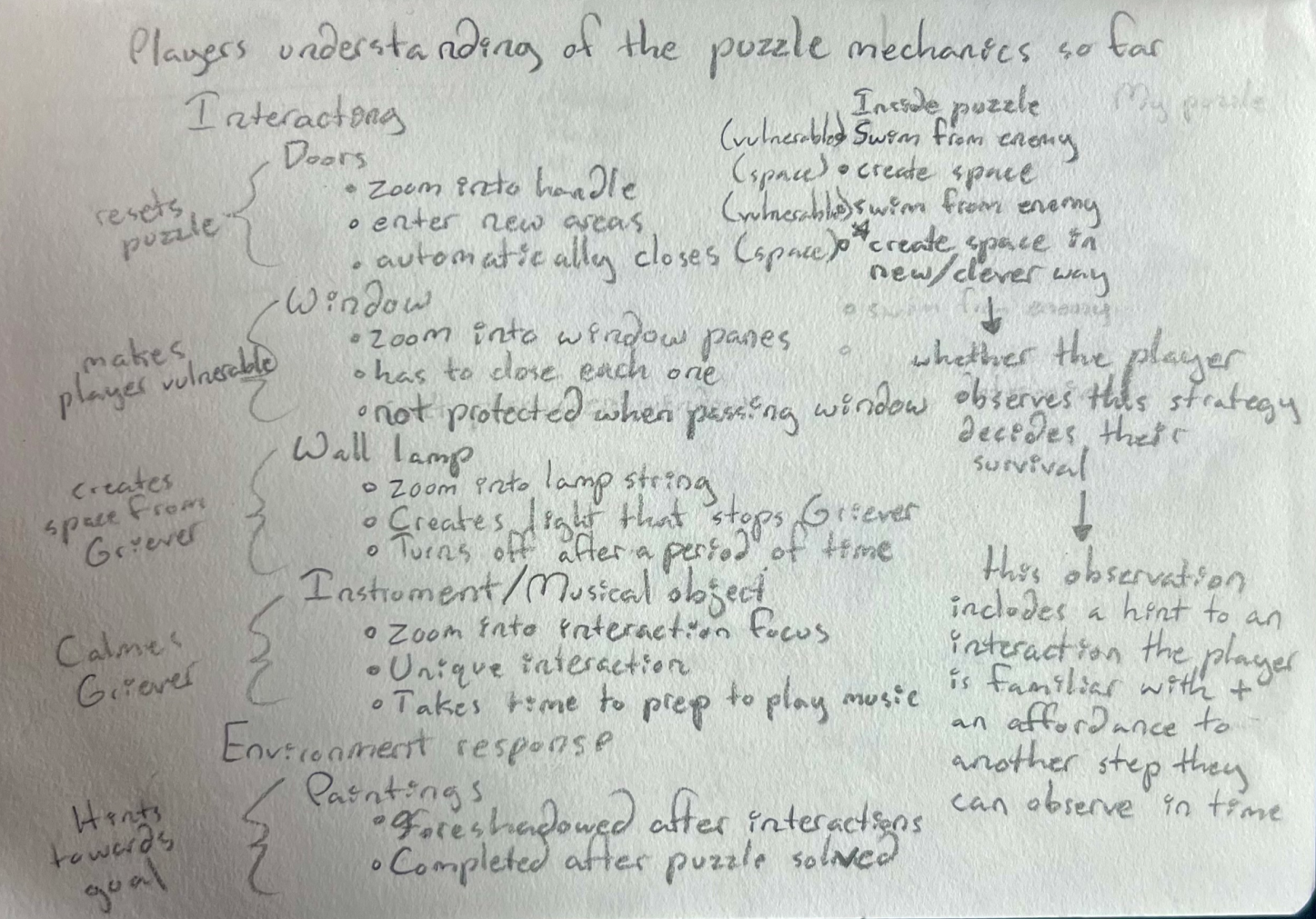
Onboarding Puzzle Mechanics
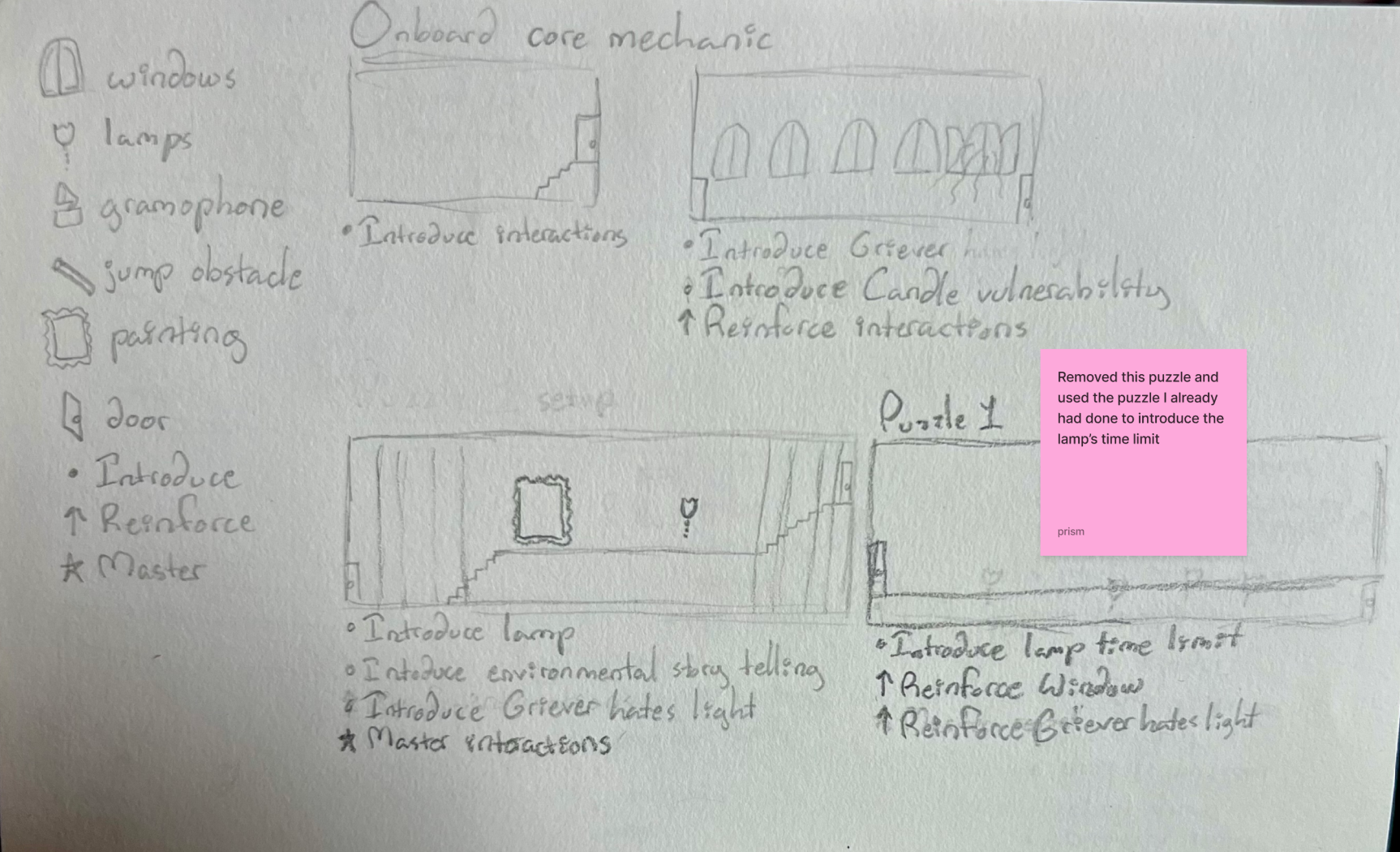
The first interaction the player does is using their ghost friend to open the door. This is meant to onboard players to how they need to move their mouse to control the ghost.
After another interaction with no consequences, the player is introduced to the Griever. They must try to turn on the old wall lamp 3 times before it lights up and protects them from the Griever with its light.
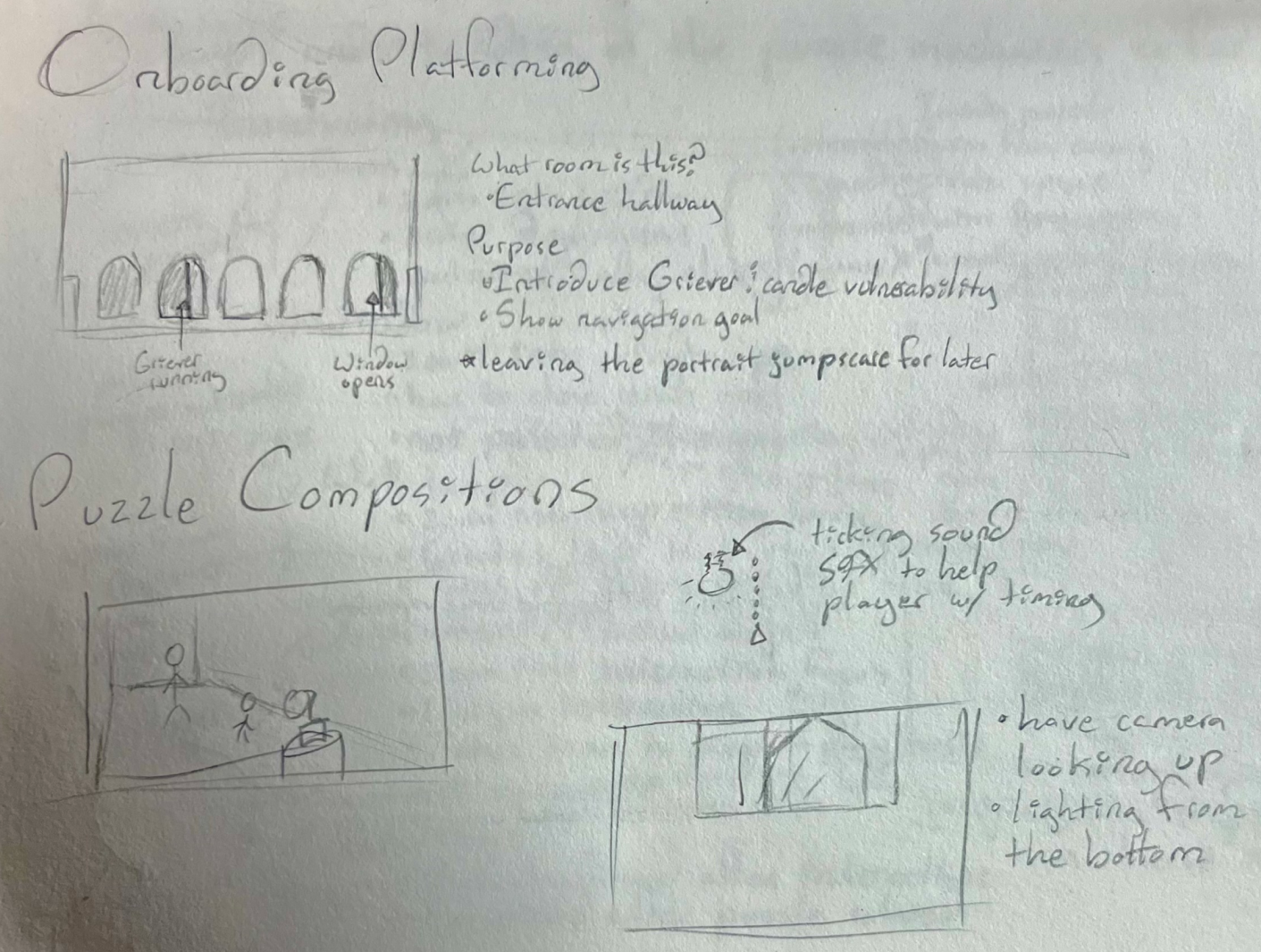
If they turn around and walk toward the Griever, they’ll find that the light from their candle also repells them.
Testing Player with Puzzle
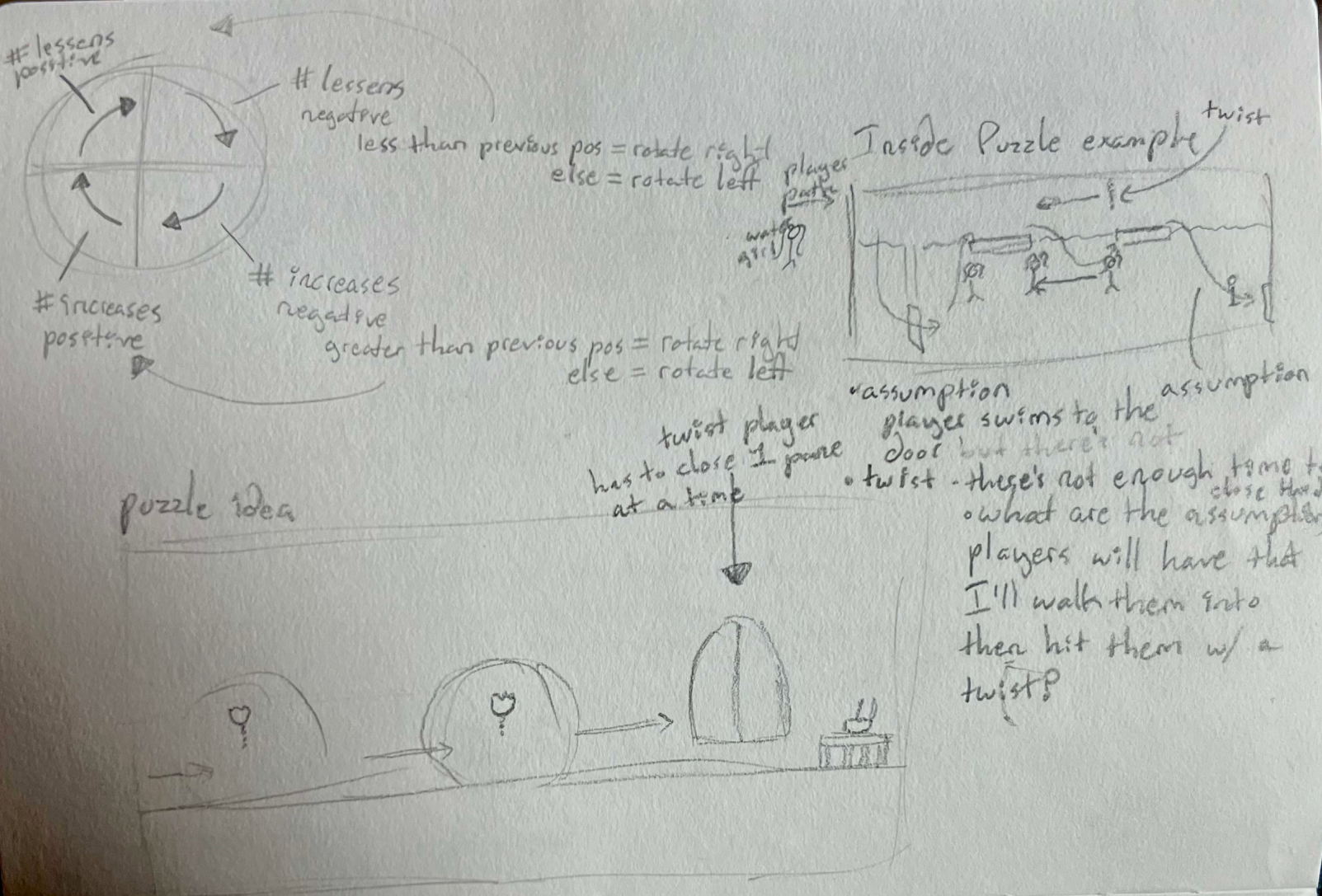
After introducing the mechanics and the Griever, I introduced a puzzle to test their knowledge of the gameplay’s rules so far.
The assumption
The player needs to turn on the light with their back toward the Griever, same as in the previous room
If they do, the Griever will catch up to them too quickly and kill them
The solution
The player needs to face the Griever while turning on the light to repel them with their candle while they do
Creating Tension and Relief
The tension
After the player turns on the wall lamp, they’ll notice this one flickers and only stays on for a period of time
They need to run to the end of the hall to find their ghost friend’s Cherished Item and use it in time
The relief
Once the Cherished Item is used, it emits a blue glow it stops the Griever from being hostile
Now when the player faces the Griever, they are dancing away, appearing to be entranced by the record player’s music
When the Griever reaches a painting on the wall, it returns to the painting as the painting of a dancer’s missing dancing partner
Gameplay Walkthrough
Polishing the experience
I created static and animated materials as well as Niagara effects for the gameplay
I found SFX and also created SFX from scratch using Ableton Live
I recorded myself for the dialogue VO
I set dressed the environment to create a mysterious atmosphere for the player